CBD Belapur NMMC Jurisdiction: NMMC vs CIDCO Explained for Property Buyers
Quick Answer
CBD Belapur falls within the municipal area administered by the Navi Mumbai Municipal Corporation, commonly called NMMC. However, CIDCO may still be relevant to a property’s land allotment, lease conditions, transfer permissions, development approvals or original title documents. In simple words, NMMC and CIDCO can both appear in a CBD Belapur property transaction, but they perform different functions. A buyer should not decide the property’s legal status only from its address, property-tax receipt or proximity to CIDCO Bhavan. The exact plot, building approvals, land tenure and title documents must be checked separately.
Disclaimer: This is an educational property-verification guide, not legal advice. Authority roles, transfer procedures and document requirements may differ by property. Verify the latest position with NMMC, CIDCO, MahaRERA, IGR Maharashtra and a property lawyer before making a transaction.
Why CBD Belapur’s Jurisdiction Confuses Buyers
CBD Belapur is one of Navi Mumbai’s main residential, commercial and administrative centres. It is also home to important government offices, including CIDCO Bhavan. CIDCO’s official website lists its head office as CIDCO Bhavan, CBD Belapur, Navi Mumbai. The same CIDCO portal provides access to services such as development permissions, citizen services, CRZ certificates and public grievances. This creates a common question: “If CBD Belapur is under NMMC, why does CIDCO appear in the property papers?” The answer lies in Navi Mumbai’s development history. CIDCO originally planned and developed large parts of Navi Mumbai. NMMC later became responsible for municipal administration in the developed northern nodes, including Belapur. But municipal administration does not automatically remove every CIDCO condition attached to the land. A property can therefore:
- Fall within NMMC municipal limits
- Pay property tax to NMMC
- Be located in a CIDCO-planned node
- Stand on CIDCO-allotted or leasehold land
- Require checking of CIDCO transfer or lease conditions
- Have building approvals issued by the relevant planning authority
- Require MahaRERA verification if it is part of a registered project
That is why buyers must ask a more useful question than simply, “Is it NMMC or CIDCO?” The correct question is: Which authority controls each part of this particular property transaction?
CBD Belapur: Which Authority Handles What?
| Property matter | Authority commonly involved | What the buyer should verify |
| -- | - | |
| Municipal jurisdiction | NMMC | Ward, civic jurisdiction and applicable municipal records |
| Property tax | NMMC, where assessed by NMMC | Assessment record, owner name, dues and paid receipts |
| Original land allotment | CIDCO, where it is CIDCO-allotted land | Allotment letter, agreement to lease and plot conditions |
| Leasehold conditions | CIDCO, where applicable | Lease deed, permitted use, transfer conditions and outstanding dues |
| Property transfer | CIDCO may be involved for certain properties | Transfer order, permission or applicable compliance |
| Building approval | Competent planning authority | Sanctioned plan, development permission and amendments |
| Commencement Certificate | Competent approving authority | Exact building, wing, stage and approved floors |
| Occupation Certificate | Competent approving authority | Whether the OC covers the offered unit, wing and floor |
| Project registration | MahaRERA | Project status, promoter, plans, completion date and disclosures |
| Sale deed registration | IGR Maharashtra | Registered document, Index II and registration details |
| Society membership | Cooperative housing society | Share certificate, membership transfer and dues |
| Title verification | Seller, landowner and transaction history | Full ownership chain reviewed by a property lawyer |
This table is a starting point. It should not be used as a blanket rule for every building in Belapur. The relevant authority can depend on the plot’s history, title documents, approval date and land tenure.
What Does NMMC Jurisdiction Mean?
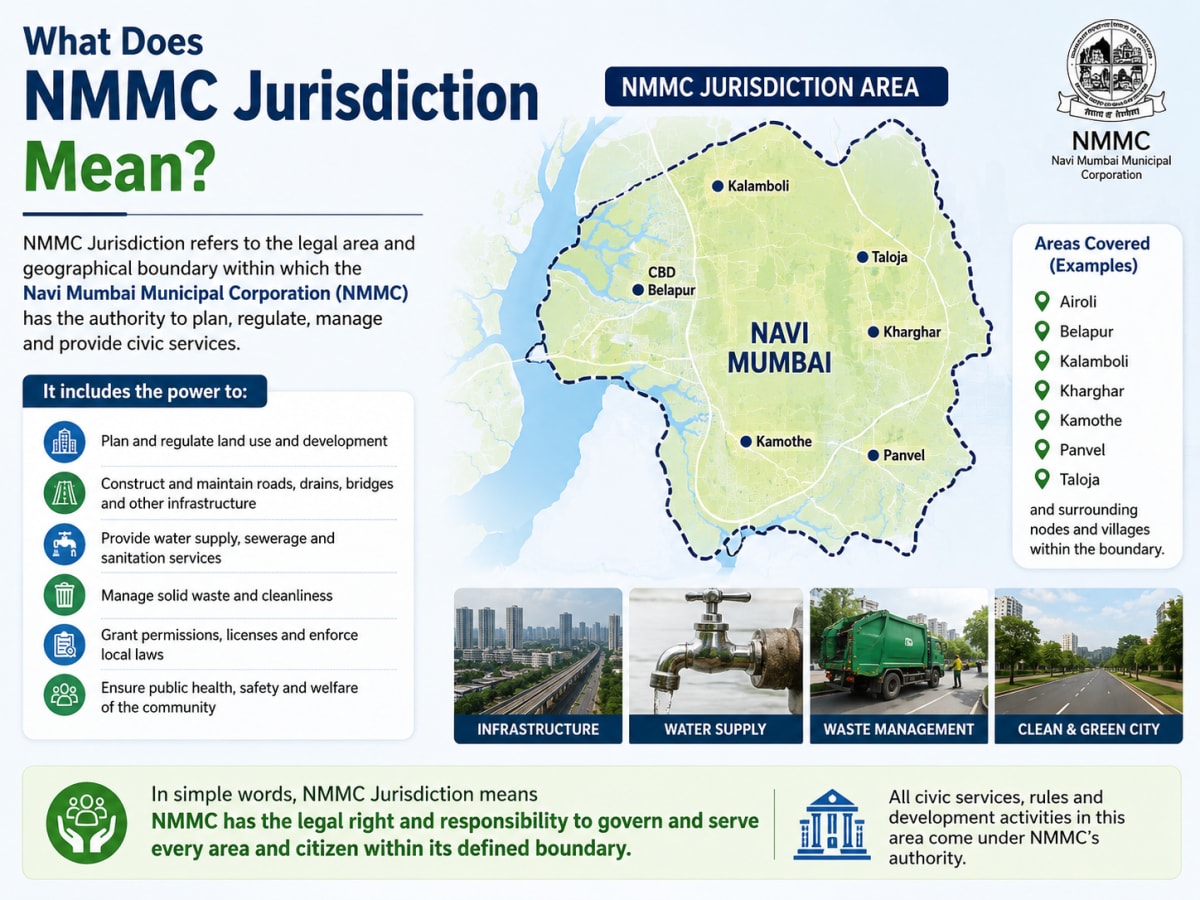
NMMC stands for Navi Mumbai Municipal Corporation. For a CBD Belapur property owner, NMMC jurisdiction generally relates to municipal administration and civic functions. Depending on the service and property, NMMC may handle matters such as:
- Property-tax assessment
- Municipal dues
- Water and drainage services
- Civic complaints
- Solid-waste services
- Roads and local infrastructure
- Municipal notices
- Certain building or planning records
- Local ward administration
NMMC’s official website is the correct starting point for checking its current services, departments and citizen facilities. However, an NMMC property-tax receipt should not be treated as proof of clear ownership. A tax record mainly shows that a property has been assessed for municipal taxation. It does not, by itself, confirm:
- A complete ownership chain
- Valid CIDCO transfer
- Clear leasehold rights
- Approved construction
- Absence of a home loan
- Absence of litigation
- Society membership
- A valid Occupation Certificate
Property tax is one part of verification, not the full verification.
What Is CIDCO’s Role in CBD Belapur?
CIDCO stands for the City and Industrial Development Corporation of Maharashtra. CIDCO played a central role in planning and developing Navi Mumbai. It acquired and developed land, created nodes, allotted plots and built infrastructure. CIDCO may still be relevant when a Belapur property involves:
- CIDCO-allotted land
- Leasehold land
- An agreement to lease
- A CIDCO lease deed
- Plot-use restrictions
- Transfer conditions
- Mortgage permissions
- Outstanding lease premiums
- Development permissions
- Original allotment conditions
- Special allotment schemes
CIDCO’s official portal lists services related to development permission, environmental clearances, CRZ certificates, public grievances and citizen or business services. This does not mean every flat in CBD Belapur requires the same CIDCO process. A flat in an older cooperative housing society, a privately developed commercial building and a CIDCO-allotted plot may have very different documents. The documents must be checked property by property.
What Does CIDCO Bhavan Belapur CBD Mean for Buyers?
CIDCO Bhavan is CIDCO’s head office in CBD Belapur. Its official contact page identifies the location as CIDCO Bhavan, CBD Belapur, Navi Mumbai – 400614. But its location does not decide the legal status of nearby properties. For example, a seller cannot claim:
“CIDCO Bhavan is nearby, so this property is automatically CIDCO-approved.” That statement is not enough. Similarly, being inside NMMC limits does not automatically prove that the land is freehold or that no CIDCO transfer condition applies. The buyer must check the actual documents connected with the plot and building.
NMMC Jurisdiction and CIDCO Ownership Are Not the Same
This is the most important point in the article. Municipal jurisdiction answers:
Which local body provides civic administration? Land ownership or lease status answers: Who owns the land, or under what conditions is it held? Planning approval answers: Which authority approved the development or construction? Property registration answers: Where was the sale, transfer or mortgage document registered? MahaRERA registration answers: Is the real estate project registered and what has the promoter disclosed? These are separate questions. A property may be within NMMC’s municipal jurisdiction but still have a CIDCO lease deed in its title chain. That is not automatically a problem. It simply means the buyer must understand and verify the lease and transfer conditions before proceeding.
How to Verify a CBD Belapur Property Step by Step
Step 1: Identify the Exact Property
Do not begin with only the building name. Collect:
- Sector number
- Plot number
- Building name
- Society name
- Wing
- Floor
- Flat or office number
- CTS or survey reference, where applicable
- Seller’s full name
- MahaRERA number, if applicable
The same sector can contain properties with different land and approval histories.
Step 2: Find Out Whether the Land Is Leasehold or Freehold
Ask the seller for the original land document. This may include:
- CIDCO allotment letter
- Agreement to lease
- Lease deed
- Conveyance deed
- Assignment deed
- Society conveyance
- Deemed-conveyance order
- Development agreement
Leasehold in simple words
A leasehold property is held under a lease for a specified term and subject to conditions imposed by the landowner or authority. The buyer should check:
- Remaining lease term
- Permitted property use
- Transfer restrictions
- Mortgage conditions
- Outstanding lease dues
- Breach notices
- Whether the society has received conveyance
Do not assume that “old building” means “freehold property.”
Step 3: Verify the Ownership Chain
A title chain is the sequence of documents showing how the property moved from the original owner or allottee to the current seller. Check:
- Original allotment or land document
- Previous agreements and sale deeds
- Current seller’s registered purchase document
- Index II records
- Society share certificate
- Loan and mortgage documents
- Release deed, if an earlier loan was closed
- Inheritance or succession documents, where applicable
For a detailed process, link this section to How to Verify Property Ownership. The Maharashtra Department of Registration and Stamps is the official government department responsible for registration and stamp-related services. Its portal should be used for the latest registration, e-search and valuation facilities. An Index II helps identify a registered transaction. It is not a substitute for reading the complete registered document.
Step 4: Identify the Building-Approval Authority
Ask for copies of:
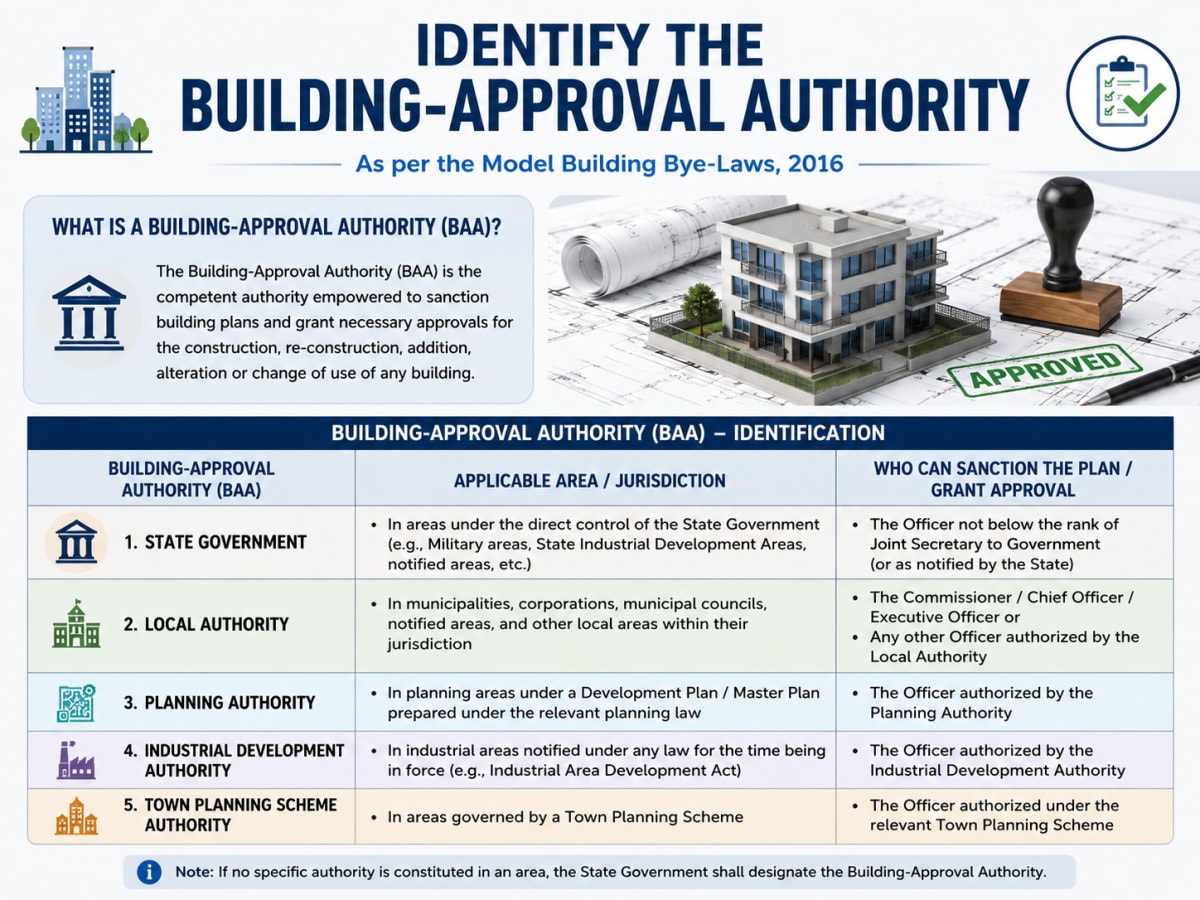
- Sanctioned building plan
- Development permission
- Commencement Certificate
- Revised sanctioned plans
- Completion Certificate
- Occupation Certificate
Check which authority issued each document. Then compare:
- Plot number
- Building name
- Wing
- Approved floors
- Flat layout
- Permitted use
- Date and reference number
Link this section naturally to Building Plan Approval and OC vs CC vs Possession Letter.
Step 5: Check the Occupation Certificate
The Occupation Certificate, commonly called the OC, indicates that the competent authority has permitted occupation of the completed building or relevant portion. Do not merely ask, “Does the building have an OC?” Ask:
- Does the OC cover this wing?
- Does it cover this floor?
- Does it cover the full building or only part of it?
- Does the flat number match?
- Have later alterations been made?
- Does the actual layout match the approved plan?
A possession letter from a builder is not the same as an OC.
Step 6: Check CIDCO Documents Where Applicable
For a CIDCO-connected property, ask for:
- Allotment letter
- Agreement to lease
- Registered lease deed
- Transfer order or permission
- Transfer-charge receipts
- No-dues confirmation
- Mortgage permission, if applicable
- Change-of-use approval, if applicable
- Breach or regularisation correspondence
- Conveyance documents
Do not assume that CIDCO permission is always required for every transaction. The requirement must be checked from the exact title documents and the latest applicable procedure.
Step 7: Check NMMC Records
Ask for:
- Latest property-tax bill
- Paid tax receipts
- Name appearing in the tax record
- Outstanding municipal dues
- Water dues, where applicable
- Notices issued against the premises
- Records of unauthorised construction, where available
- Civic or building records relevant to the property
A name mismatch does not always mean fraud. It may simply mean that the municipal mutation was not updated. But it should be clarified before payment.
Step 8: Verify MahaRERA Information
For an under-construction or RERA-covered project, search the official MahaRERA portal. The MahaRERA website provides facilities for registered-project searches, project maps, project progress, complaints, lapsed projects, revoked projects and homebuyer guidance. Check:
- Project name
- Promoter name
- Registration number
- Project address
- Land details
- Approved plans
- Declared completion date
- Project extensions
- Quarterly progress
- Encumbrance disclosures
- Complaints and orders
- Lapsed, revoked or abeyance status
Link this section to MahaRERA Project Search. MahaRERA registration supports project verification, but it does not guarantee clear title, timely possession or construction quality.
Step 9: Verify Society Records

For a resale flat, ask the society for:
- Society registration details
- Share certificate
- Current member’s name
- Maintenance no-dues letter
- Pending special repair charges
- Transfer forms
- Society NOC, where required
- Parking records
- Conveyance or deemed-conveyance status
- Redevelopment resolutions
- Major legal disputes
Link this section to Society NOC and Resale Flat Documents Checklist.
Step 10: Arrange a Professional Title Review
Before token payment, ask a property lawyer to review:
- Ownership chain
- Leasehold conditions
- CIDCO documents
- Municipal records
- Encumbrances
- Loan status
- Court disputes
- Sanctioned plans
- OC and CC
- Society documents
- Draft agreement
Online searches are useful, but they should not be the only verification.
Documents Checklist for a CBD Belapur Property
Basic Property Documents
- [ ] Seller’s registered sale deed or agreement
- [ ] Earlier title-chain documents
- [ ] Index II
- [ ] Seller’s identity documents
- [ ] Property card or relevant land record
- [ ] Latest property-tax bill
- [ ] Paid property-tax receipts
- [ ] Home-loan closure or release documents
- [ ] Encumbrance and litigation search
- [ ] Approved building plan
- [ ] Commencement Certificate
- [ ] Completion Certificate
- [ ] Occupation Certificate
CIDCO Documents, Where Applicable
- [ ] CIDCO allotment letter
- [ ] Agreement to lease
- [ ] Lease deed
- [ ] Conveyance or assignment document
- [ ] CIDCO transfer order or permission
- [ ] Transfer-charge receipts
- [ ] No-dues confirmation
- [ ] Mortgage permission
- [ ] Permitted-use confirmation
- [ ] Breach or regularisation correspondence
Society and Resale Documents
- [ ] Society registration certificate
- [ ] Original share certificate
- [ ] Society membership details
- [ ] Maintenance no-dues letter
- [ ] Society NOC, where applicable
- [ ] Transfer forms
- [ ] Conveyance or deemed-conveyance record
- [ ] Parking information
- [ ] Major-repair information
- [ ] Redevelopment records, if applicable
Under-Construction Project Documents
- [ ] MahaRERA registration
- [ ] Promoter’s title report
- [ ] Sanctioned plan
- [ ] Development permission
- [ ] Commencement Certificate stages
- [ ] Encumbrance disclosure
- [ ] Agreement for sale
- [ ] Project completion date
- [ ] Quarterly progress updates
- [ ] Extension orders, if any
For a complete checklist, add a contextual link to Flat Buying Documents Checklist.
New Flat vs Resale Flat: What Changes?
| Verification point | New or under-construction flat | Resale flat |
| -- | -- | |
| Main party to verify | Promoter or builder | Current owner |
| MahaRERA | Usually important where the project is covered | Check original project history if relevant |
| Title review | Promoter’s land rights and development rights | Full seller-to-seller ownership chain |
| Building plan | Compare with promoter’s latest sanctioned plan | Compare actual flat with sanctioned plan |
| OC | May not yet be issued in an ongoing project | Should be checked for ready occupation |
| CIDCO records | Check land allotment, lease and development rights | Check transfer history and lease conditions |
| NMMC tax | May initially be in promoter or project records | Verify current tax assessment and dues |
| Society records | Society may not yet be formed | Share certificate and society dues are important |
| Loan check | Check project finance and disclosed encumbrances | Check seller’s home loan and release documents |
For a new flat
Focus on:
- Promoter’s title
- Development rights
- MahaRERA disclosures
- Sanctioned plan
- Construction permissions
- Declared possession date
- Encumbrances
- Agreement clauses
For a resale flat
Focus on:
- Seller’s ownership
- Previous sale documents
- Share certificate
- Society transfer
- OC
- Existing loan
- CIDCO transfer history, where applicable
- Property-tax and maintenance dues
- Unapproved changes inside the flat
Red Flags Buyers Should Notice
A red flag does not always mean you must reject the property. It means you need more verification. Watch for these situations:
- The seller cannot explain whether the land is leasehold or freehold.
- The broker says all Belapur properties follow the same rules.
- CIDCO Bhavan’s location is used as proof of approval.
- Only a property-tax receipt is shown as proof of ownership.
- The seller refuses to share the lease deed.
- The CIDCO allotment details do not match the property.
- Transfer permission is discussed but no document is provided.
- The OC covers another wing or floor.
- The flat layout differs from the sanctioned plan.
- A residential unit is being used commercially without supporting approval.
- The MahaRERA details do not match the marketed project.
- The society share certificate is missing.
- The seller’s name differs across documents without explanation.
- A closed home loan still appears in the records.
- Major society dues have not been disclosed.
- The seller demands token money before document inspection.
- The quoted price is unusually low but the reason is unclear.
Stay calm and ask for documents. Many issues can be clarified, but they should not be ignored.
Common Mistakes CBD Belapur Buyers Make
1. Treating NMMC and CIDCO as competitors
They are different authorities with different functions. The presence of one does not automatically remove the role of the other.
2. Assuming property tax proves ownership
Property tax is an important municipal record, but it does not prove a clear and marketable title.
3. Checking only the current sale deed
The current document must be connected to the earlier title chain.
4. Asking only whether the building has an OC
The OC must cover the exact wing, floor and unit.
5. Ignoring lease conditions
A lease deed may contain conditions affecting transfer, mortgage or permitted use.
6. Relying only on the broker’s explanation
The broker can help coordinate the transaction, but authority and legal records should be checked independently.
7. Paying token money too early
Do not pay token money only because the price looks attractive. First check the seller’s identity, title documents, approvals, loan status, society dues and written token terms.
What to Check Before Paying Token Money
Before paying any token amount for a CBD Belapur property, verify:
- [ ] Seller’s identity
- [ ] Seller’s ownership document
- [ ] Complete title chain
- [ ] Land tenure: leasehold or freehold
- [ ] CIDCO allotment or lease documents, where applicable
- [ ] Transfer conditions, where applicable
- [ ] Sanctioned plan
- [ ] CC and OC
- [ ] Actual flat layout
- [ ] MahaRERA details, where applicable
- [ ] Existing home loan
- [ ] Property-tax dues
- [ ] Society maintenance dues
- [ ] Share certificate
- [ ] Pending litigation or notices
- [ ] Written token refund conditions
The token receipt should clearly mention:
- Property details
- Seller and buyer names
- Token amount
- Total agreed consideration
- Document-verification condition
- Refund condition
- Time allowed for verification
- Responsibility for outstanding dues
Do not rely only on verbal promises.
Final Buyer Checklist
Before finalising a property in CBD Belapur, you should be able to answer all these questions:
- Is the property inside NMMC’s municipal jurisdiction?
- Is the land connected to a CIDCO allotment or lease?
- Is the property leasehold or freehold?
- Does the seller have a complete ownership chain?
- Do the plot, sector and building details match across documents?
- Which authority sanctioned the building?
- Does the OC cover the exact unit?
- Does the actual construction match the plan?
- Are CIDCO transfer conditions applicable?
- Are NMMC property-tax dues clear?
- Is the project correctly disclosed on MahaRERA?
- Is the society share certificate available?
- Is any loan or mortgage pending?
- Are there any notices, disputes or unauthorised changes?
- Has a property lawyer reviewed the documents?
If several answers are unclear, delay the payment until the records are checked.
Final Verdict
CBD Belapur is within NMMC’s municipal area, but that is only one part of property verification. CIDCO may continue to matter because of the property’s land allotment, lease deed, transfer history, planning approval or original development conditions. For a buyer, the safest approach is not to choose between NMMC and CIDCO. Instead, identify the exact role of each authority in the property you are considering. Check:
- NMMC records for municipal matters
- CIDCO records for applicable land, lease and transfer matters
- MahaRERA for registered-project information
- IGR Maharashtra for registered documents
- Society records for membership and dues
- A property lawyer for the complete title review
That process gives you a clearer picture before you commit your money.
Need Help Verifying a Property in Navi Mumbai?
Navi Mumbai Property Deals follows a buyer-first approach. Before you shortlist or pay token money for a property in CBD Belapur, keep the ownership documents, CIDCO records, NMMC records, building approvals, society documents and MahaRERA details ready for verification. Use our property guides as a starting point and obtain professional legal verification before completing the transaction.
Frequently Asked Questions
1. Does CBD Belapur come under NMMC?
Yes. CBD Belapur falls within the municipal area administered by the Navi Mumbai Municipal Corporation. However, CIDCO may still be relevant for certain land, lease, transfer or development-related matters.
2. Why does CIDCO appear in CBD Belapur property documents?
CIDCO originally planned and developed Navi Mumbai and allotted or leased many plots. Therefore, CIDCO documents may remain part of a property’s title and transfer history.
3. Is CIDCO Bhavan located in CBD Belapur?
Yes. CIDCO’s official contact page lists its head office at CIDCO Bhavan, CBD Belapur, Navi Mumbai.
4. Does being close to CIDCO Bhavan prove that a property is approved?
No. The location of CIDCO Bhavan does not prove the legal status, title or approval of a nearby property.
5. Who collects property tax in CBD Belapur?
Property tax for properties assessed within NMMC’s municipal jurisdiction is generally handled through NMMC. Buyers should verify the exact assessment record and outstanding dues for the property.
6. Does an NMMC property-tax receipt prove ownership?
No. It supports municipal-tax verification, but clear ownership requires checking the registered title documents and complete ownership chain.
7. Is every CBD Belapur property leasehold?
No. Land tenure can differ by plot and building. Buyers must examine the original allotment, lease, conveyance and title documents.
8. Is CIDCO permission required for every resale flat?
Not necessarily. The requirement depends on the land, lease conditions, conveyance status and current applicable procedure. Verify it from the property documents and CIDCO.
9. Where should I verify a CBD Belapur project’s MahaRERA status?
Use the official MahaRERA portal to check registered projects, project progress, promoter details, complaints and project status.
10. Is a MahaRERA-registered project completely safe?
No. Registration provides important project information, but buyers must still verify title, approvals, agreements, construction progress and financial or legal risks.
11. How can I verify the OC of a flat?
Obtain the OC copy, check the issuing authority, and confirm that it covers the correct plot, wing, floor and unit.
12. What is the biggest risk when buying a resale flat in Belapur?
The main risk is relying on one document while ignoring the complete picture. Buyers should verify ownership, lease conditions, OC, society records, outstanding dues, loans and actual construction.
13. Should I approach NMMC or CIDCO first?
Start by examining the property documents. They usually indicate whether the matter relates to municipal records, CIDCO land or lease conditions, building approval, registration or society administration.
14. Can a property come under NMMC and still have CIDCO conditions?
Yes. Municipal jurisdiction and CIDCO lease or allotment conditions are different matters and can apply to the same property.
15. Should I pay token money before checking the documents?
No. Complete a basic document review and put the verification and refund terms in writing before paying token money.